Exclusive 1:1 albums vs Access pass albums: What’s the difference?
One-of-one exclusivity or scalable reach? A side-by-side look at the two album models on Amari — including supply, resale, and royalties — to help you choose.
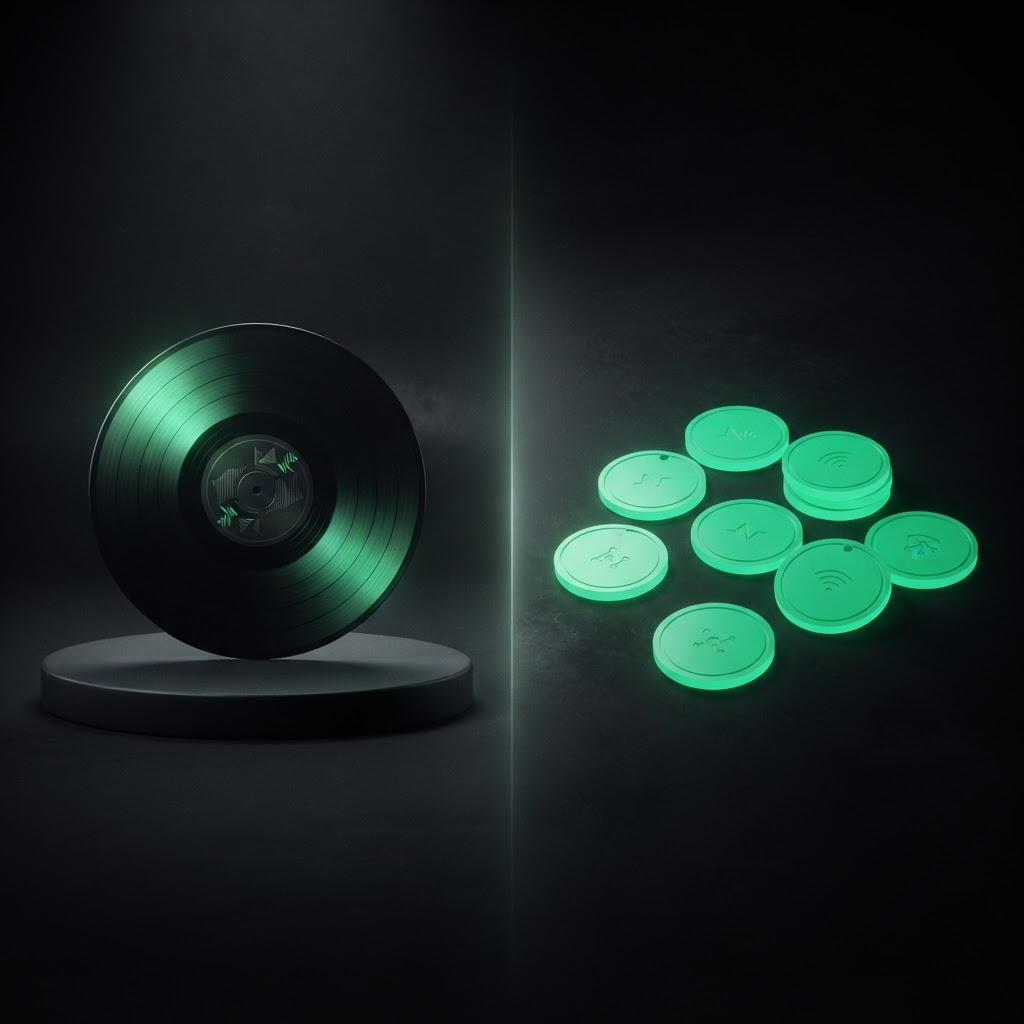
Two ways to release
Amari gives musicians two distinct models. An exclusive 1:1 album is a single collectible owned by one person. An access-pass album sells passes that each unlock streaming. Choosing between them comes down to your goal: singular exclusivity or scalable reach.
Ownership
With a 1:1 album, one collector owns the entire release outright, like an original master. With an access pass, many fans each own a pass that grants access — you are selling entry, not the master itself. Both are real NFTs that can be resold on the secondary market.
Supply and resale
A 1:1 album has a supply of one and a single bundle price, so it usually commands a premium. Access passes can be unlimited — revenue scales with how many fans buy in — or capped as a limited edition, where selling out pushes demand to the secondary market and drives real resale value.
Royalties
Both models earn you royalties on resales. For access passes you set the resale royalty yourself (0–15%) at creation, and it is paid automatically on-chain every time a pass changes hands — turning a one-time sale into ongoing income.
Which should you choose?
Pick a 1:1 album for a landmark drop or a superfan centerpiece. Pick an unlimited access pass to reach as many listeners as possible, or a limited-edition pass when you want scarcity and a lively resale market. Many artists use both over time.